|
|---|
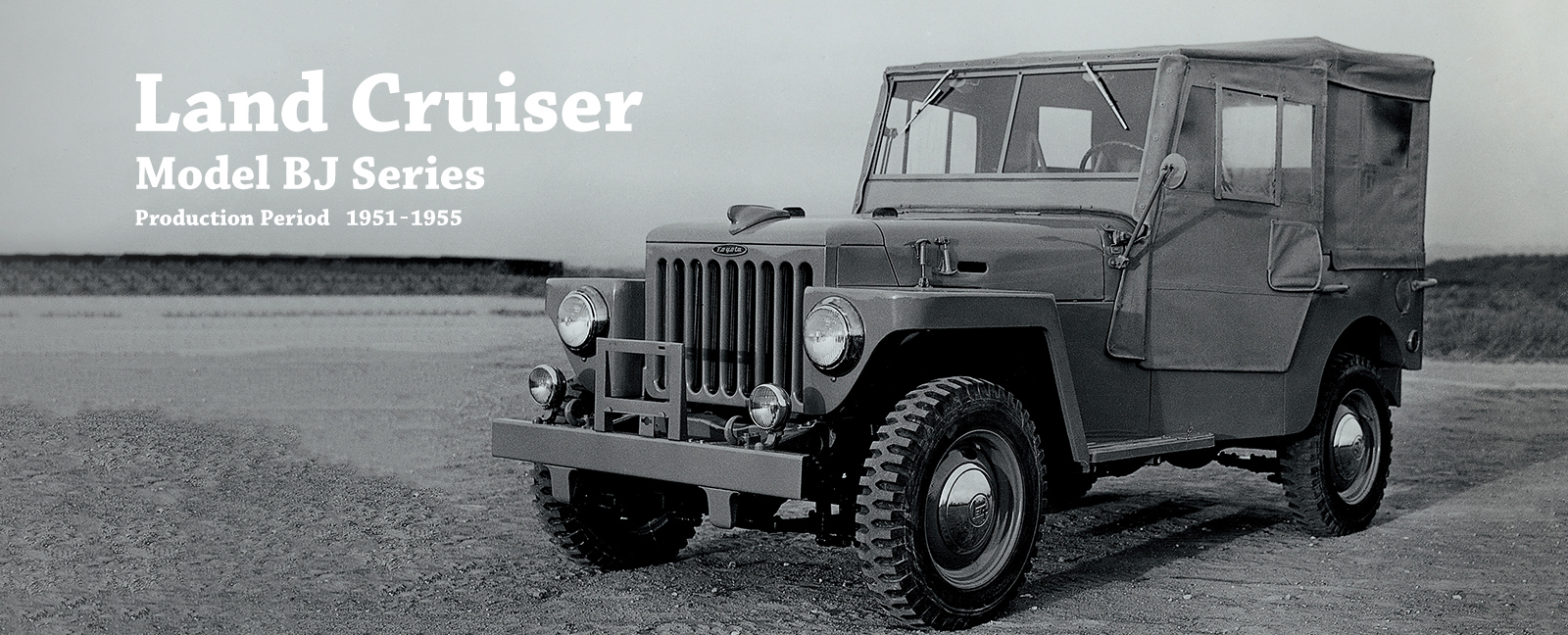
The automobile industry was in a fateful crisis from Japan's defeat in war and the chaos that followed it. However, military procurement enabled a recovery and the combination of the accumulation of technology from before the war and present material resulted in the development of an automobile above expectations. The chassis of the Toyota Jeep BJ was based on the SB-type 1-ton truck (with an S-type 995cc engine) that was originally released in 1947. For that reason, at 2,400mm the wheelbase about 200mm longer than that of the Jeep, and the body was also a size larger. The SB-type compact truck was commonly known as the Pony Toyota (and later the Toyopet Truck), and because it was designed as a small transport vehicle that could also double as a passenger car, its suspension settings were likewise soft. These characteristics were carried over into the Toyota BJ-type, so it gave a surprisingly comfortable ride. The engine was a 3,386cc water-cooled in-line 6-cylinder B-type gasoline engine. Jeeps being built at that time had a side valve construction, but the B-type engine was an OHV (Over Head Valve) type. The engine was originally designed in 1937, with the first prototype completed the next year in 1938, after which it was installed in the GB-type truck, the KB-type truck, and the BM-type truck, being primarily an engine for 4-ton class trucks. The capacity of the B-type engine when it was first developed was a maximum output of 75HP/3,200rpm, and a maximum torque of 21kgm/1,600rpm. Later these specs were improved by boosting the compression ratio and through other refinements, so that whereas the first model Toyota Jeep BJ model had a maximum output of 82HP/3,000rpm and a maximum torque of 21.6kgm/1,600rpm, by the late model version the power had been boosted to a maximum output of 85HP/3,200rpm and maximum torque of 22kgm/1,600rpm. This meant reserve power for the size of the body it was mounted in, so the Toyota Jeep BJ came without a LO range subgear. The Toyota Jeep BJ was completed in 1951, and first unveiled that same year at a public showing of Toyota vehicles. There were 26 Toyota vehicles displayed at this event, and during the 3-day period the attendance amounted to some 200,000 people. Moreover, the design of the Crown was begun in 1952, with the first Crown model built in 1955.
|
|---|
Since just right after Japan's recovery from the war and its aftermath, Toyota already had future visions to export its domestic vehicles overseas. These forward-thinking Toyota employees knew just how important the Land Cruiser was to take this large step forward into further making their dreams a reality.
The Toyota Crown was first released in Japan in the mid-1950s when Toyota was working fast to build a domestic sales network to handle the demand. It was in such circumstances that from 1956 on, as part of Toyota's strategy the company decided on what was called the Land Cruiser strategy for foreign markets.
Given the fact that its performance could hold its own against rival models such as the Willys Jeep and Land Rover, Toyota decided it was the right time to expand in foreign markets, and whenever the opportunity presented itself Toyota was there with the Land Cruiser right out front.
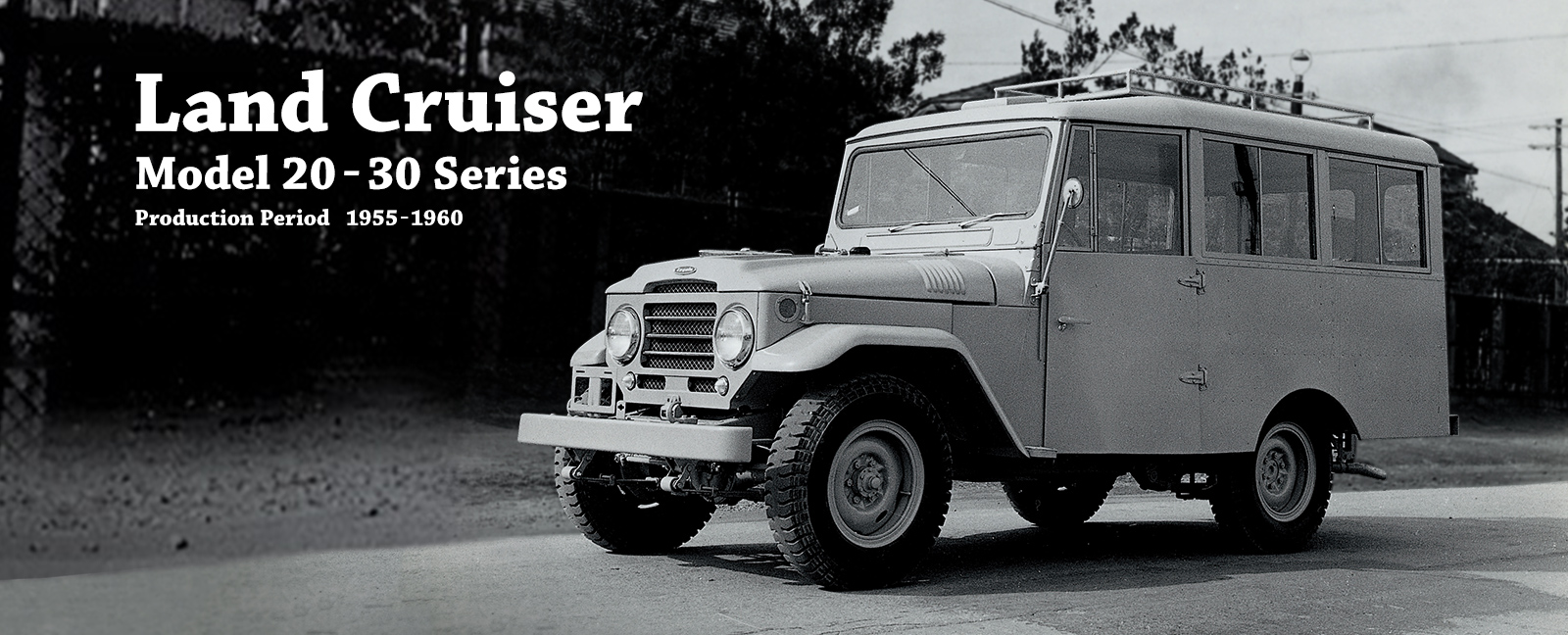
Whereas the BJ-type Land Cruiser was originally built for military use, its design in time was modified to serve industrial expansion in peacetime, partly for the purpose of stimulating domestic demand for Toyota vehicles. Then in 1955 , alongside production of the BJ-type Land Cruiser the 20-series made its debut.
After the increase of demand during the Korean War, Japanese automakers were invited to bid to meet further demand for military vehicles by supplying the U.S. Army Procurement Agency in Japan (APA). For this reason, in 1957, test vehicles supplied by Toyota, Nissan , Isuzu , and Mitsubishi , ranging from compact to large-sized trucks were gathered at the Aberdeen proving ground on the outskirts of Baltimore, Maryland for a comparative test run. This test was overseen by Toyota Chief Engineers Inagawa and Iritani. The result of the test run was that the Toyota 750kg capacity truck (2FQ15L) and the 2.5-ton capacity diesel truck (2DW15L) were adopted for procurement.

|
|---|
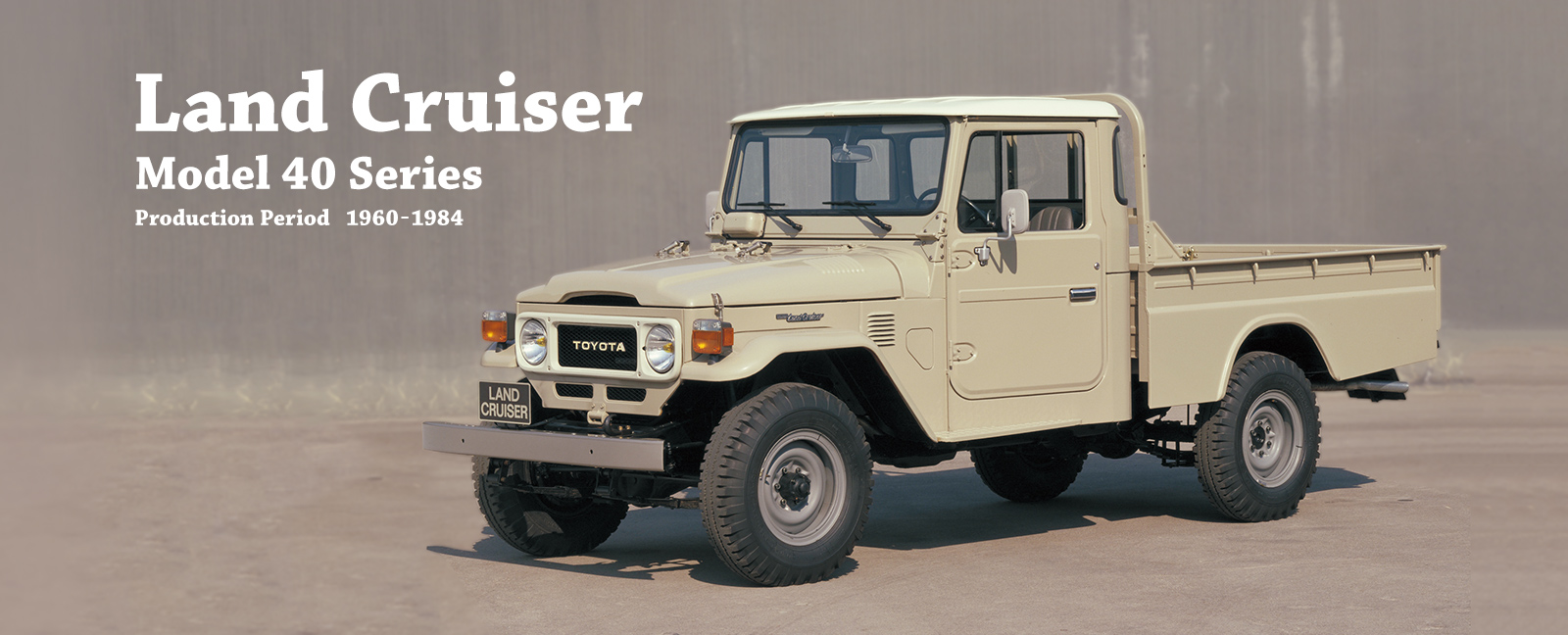
In 1960 the FJ-type took an evolutionary step into the 40-series. Though there was very little change in the external appearance of the vehicle, production techniques were modernized with the introduction of large-scale press equipment, and changes were made in processes, such as the way panels were assembled. Moreover, a LO range subgear was added to the transfer, which improved both acceleration and performance on bad roads. In addition, with the 2-speed transfer lever moved to the instrument panel and the 3-speed shift lever moved to the steering column, this made floor room so that 3 people could sit in the front. The design was so well received that few changes were made, and the first major structural development wasn't seen until the 40-series.
The FJ40V was styled as a top-heavy box-like extension of the paneling on the soft top type. To reduce the added weight resinous materials were used for the roof instead of steel paneling, and the reason for raising the roof so high was for improved visibility, with a window added to the rear corner section. The unique styling had a following and was popular.
In 1967 the market demand seriously increased for station wagons, and the FJ45V was replaced with a new FJ55V that had a wheelbase of 2,700mm.
In 1974 the BJ series debuted, which put a B-type diesel engine in the 40-series.
The appearance of the BJ40 series was epoch-making for the Japanese domestic 4x4 market. Before that the FJ 4-liter gasoline engine had been classified in the Japanese vehicle registration system as a large vehicle, making it more expensive to maintain and a heavy tax liability for individuals to own. However, with the diesel engine it became reclassified as a compact vehicle, making it easier for individual users to own. Moreover, the F-type engine underwent improvements in the same year, and the FJ56V made its debut with the new 4.2-liter 2F-type engine.
Drawing the curtain on a 24-year history as a long seller in Japan, the 40-series was followed by the debut of the 70-series. During this time there were few changes made in the external appearance of the vehicle, but it was continually improved from within. In particular, from the late 1960s to early 1970s, when attention was increasingly focused on automotive air pollution and manufacturing defects, Toyota put great efforts into addressing these problems.
|
|---|
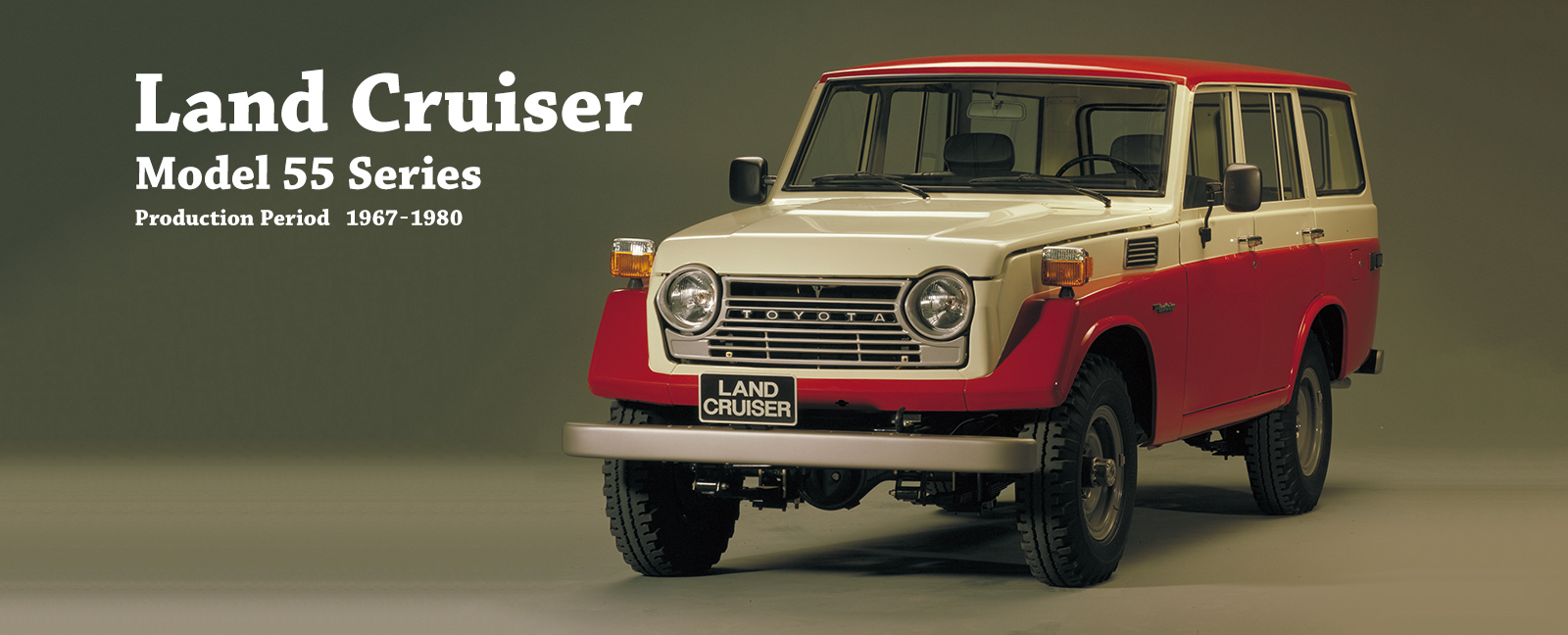
In 1967 the FJ45V was replaced with the FJ55V, which had a 2,700mm wheelbase. The Land Cruiser made its appearance as a cross-country type 4x4 vehicle, but the market had begun to accept the idea that it also could be a utility vehicle for carrying things. For that reason the demand increased for a vehicle with a larger body that could carry more people and more cargo.
Toyota's response to this demand was to build wagons like the FJ35V and FJ45V. After that the demand became strong for a real station wagon. If all you need is a vehicle to carry people or cargo, an ordinary truck can do the job. However, even if you traveled to a work site by road, once the work was done the Land Cruiser was often expected to cross ground where there was no guarantee that the roads would be passable. Depending on the weather conditions the road might wash out or become submerged under water. It was for conditions like this that people selected a Land Cruiser.
It is often assumed that all Land Cruisers were assembled at the Arakawa Auto Body Co., Ltd. (now Toyota Auto Body Co., Ltd.), but actually the long wheelbase versions such as the FJ35V and FJ45V were made at the Gifu Auto Body Industry Co., Ltd. At that time there were orders from overseas for trucks that could carry 7 to 9 people, and the demand was rising for a wagon type vehicle. Plans for a wagon design were pursued with the assumption that it would be built at the Arakawa Auto Body Co., Ltd.
However, as Toyota had out a priority on development of passenger cars such as the Crown and the Corona, the Toyota design staff was too busy to be free to work on the Land Cruiser. As a result, up through the 40-series, the design was handled by on site technical staff working with little more than rulers and compasses. However, from the 50-series on, at last designers were again free to pay serious attention to the Land Cruiser, creating serious design sketches and clay models.
Leaving some traces of the original 40-series, they added a brand new branch to the Land Cruiser tradition and created the FJ55V.
The 50-series was made to be sold on the great continents of America and Australia, and because of its shape, in America it was affectionately known as the Moose.
|
|---|
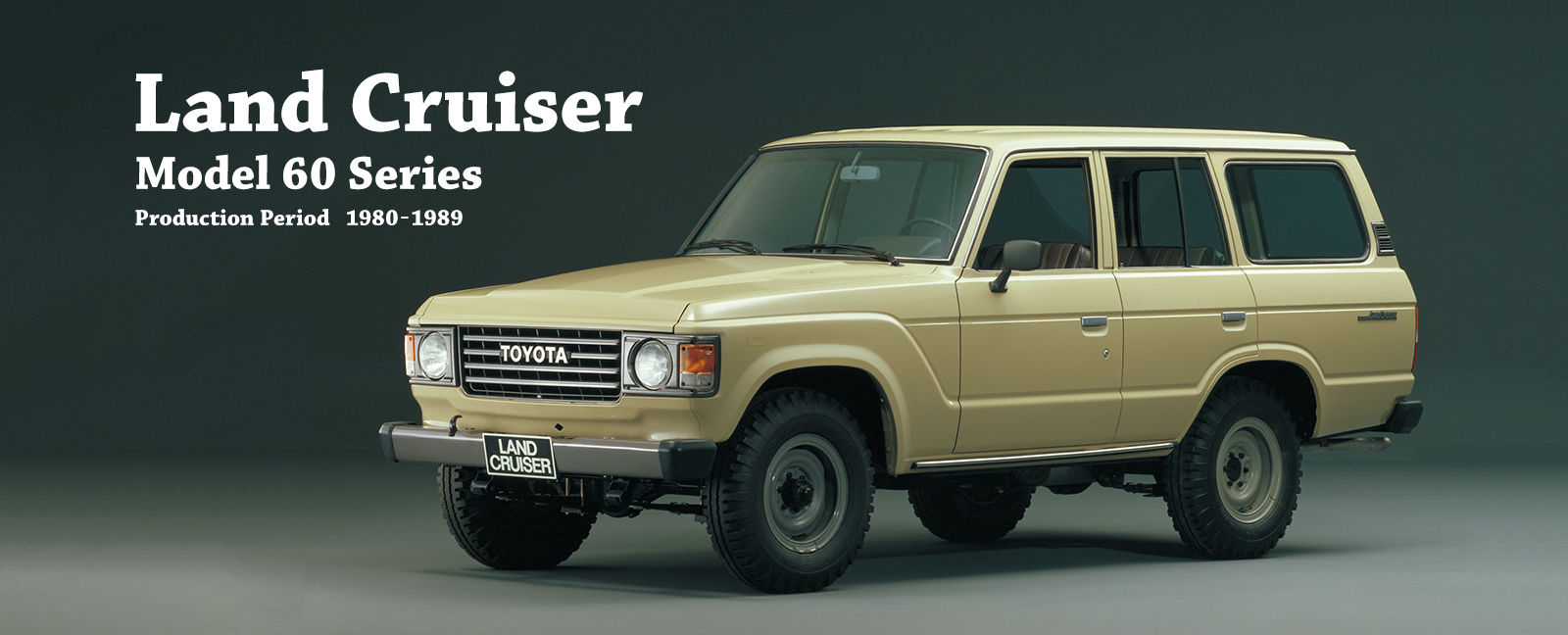
The 60-series made its appearance the next year in 1980.
Under the supervision of Chief Engineer Hiroshi Ohsawa in 1976 planning began for the next generation of the 50-series Land Cruiser. The first thing that was required was an expansion of the body size. In order to compete in the American market, and against rival vehicles like the Land Rover, something more was needed that went beyond what the FJ55V had to offer. It had to have more of the feel of a passenger car type station wagon, with a softer luxury touch in the interior and a more comfortable ride. The problem was what to do with the suspension. An independent suspension was considered, however this idea was rejected in favor of the existing rigid leaf springs of the FJ55V Land Cruiser, to ensure that it lived up to its name as a vehicle that was highly reliable on whatever road you might take it anywhere in the world.
Eventually Mr. Ohsawa's responsibilities shifted to the 4 Runner 4WD, the job of Chief Engineer for the 60-series Land Cruiser passed to Iichi Shingu, who saw it through to its debut in 1980.
When the Land Cruiser 60 made its debut, in addition to the 2F-type gasoline engine in the FJ60 and the BJ60 was added to the lineup that had a 3,431cc 3B-type diesel engine that was larger than the 2B.
A minor change was introduced in 1982. The major feature of this change was the appearance of the HJ60 with a 6-cylinder 3,980cc 2H-type diesel engine. Not only was the engine large, but the HJ60 came with a high-roof body, a 5-speed transmission, electric moon roof, remote control mirrors, and other luxury features. The FJ and BJ evolved from the 60 to the 61-series, and there was a luxury model similar to the HJ added to the BJ61. The first grade ever was created for the Land Cruiser, the GX to distinguish it from the standard model. Moreover, to comply with emissions control regulations, the 3B engine became standard for the entire BJ40-series, and the BJ42 and BJ46 debuted.
In 1984 the first full model change in 29 years (including the 20-series) was made on the 40-series, and the Land Cruiser 70-series was born. At the same time, the 60-series gained a 2H-type engine matched with an A/T, the first for a cross-country type 4x4 in Japan; and the FJ62 debuted with a 6-cylinder 3,955cc 3F-type engine.

|
|---|
The pressure from the preceding model sales volume was enormous. However, the 70 series was able evolve the Land Cruiser while maintaining the images of rigidity, reliability, and durability of the past. Without major alterations to the basic structure, many small details that pioneered the path to modernization were added on.
In 1984 a new 70-series was born, bringing to a close a long era of 29 years (including the 20-series) during which the 40-series remained virtually unchanged. There were limits to what could be done to modernize the old design of the 40-series model. For this reason Chief Engineer Masaomi Yoshii introduced a complete overhaul in the design, producing the 70-series to lead the Land Cruiser with a new generation.
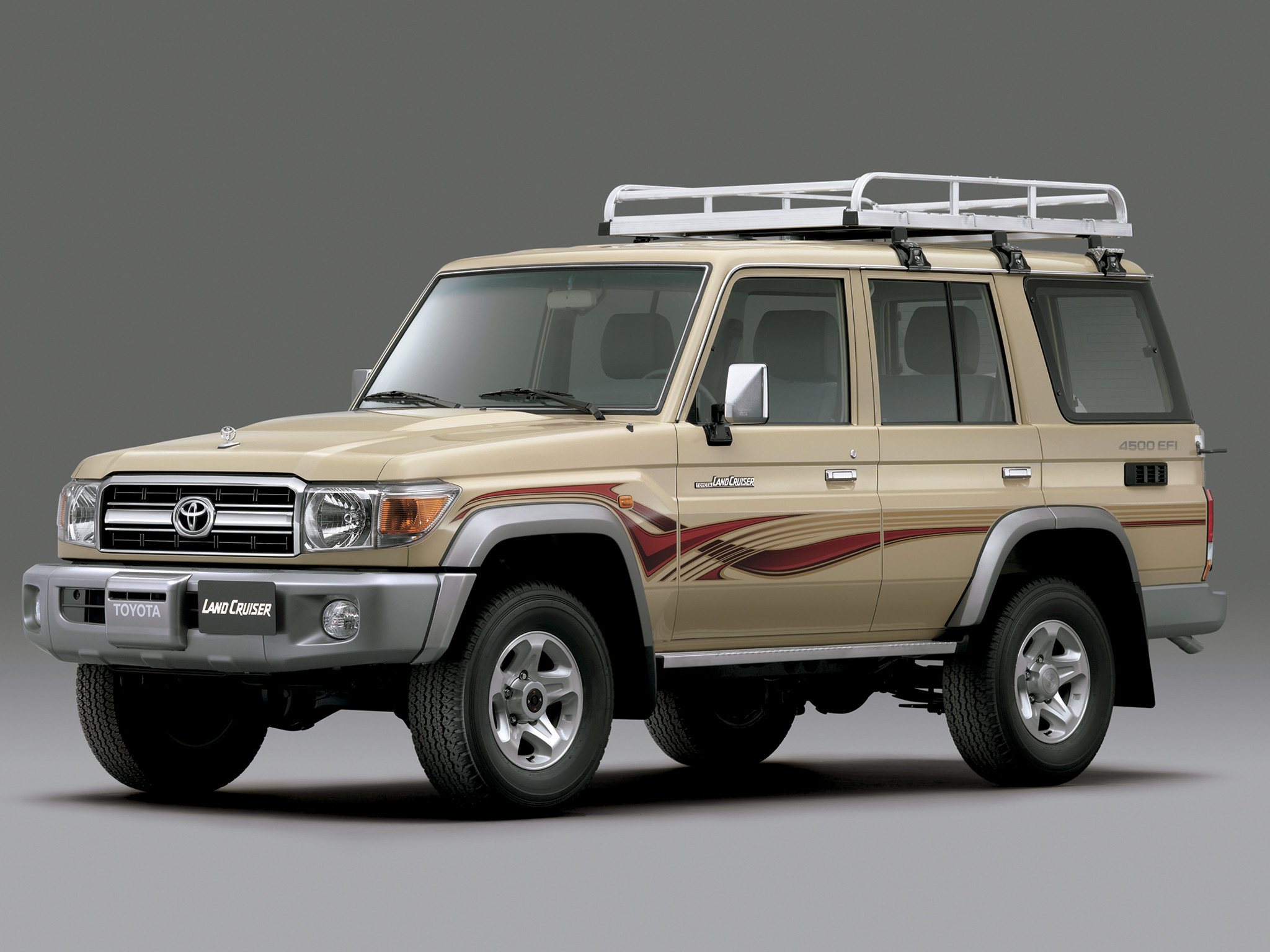
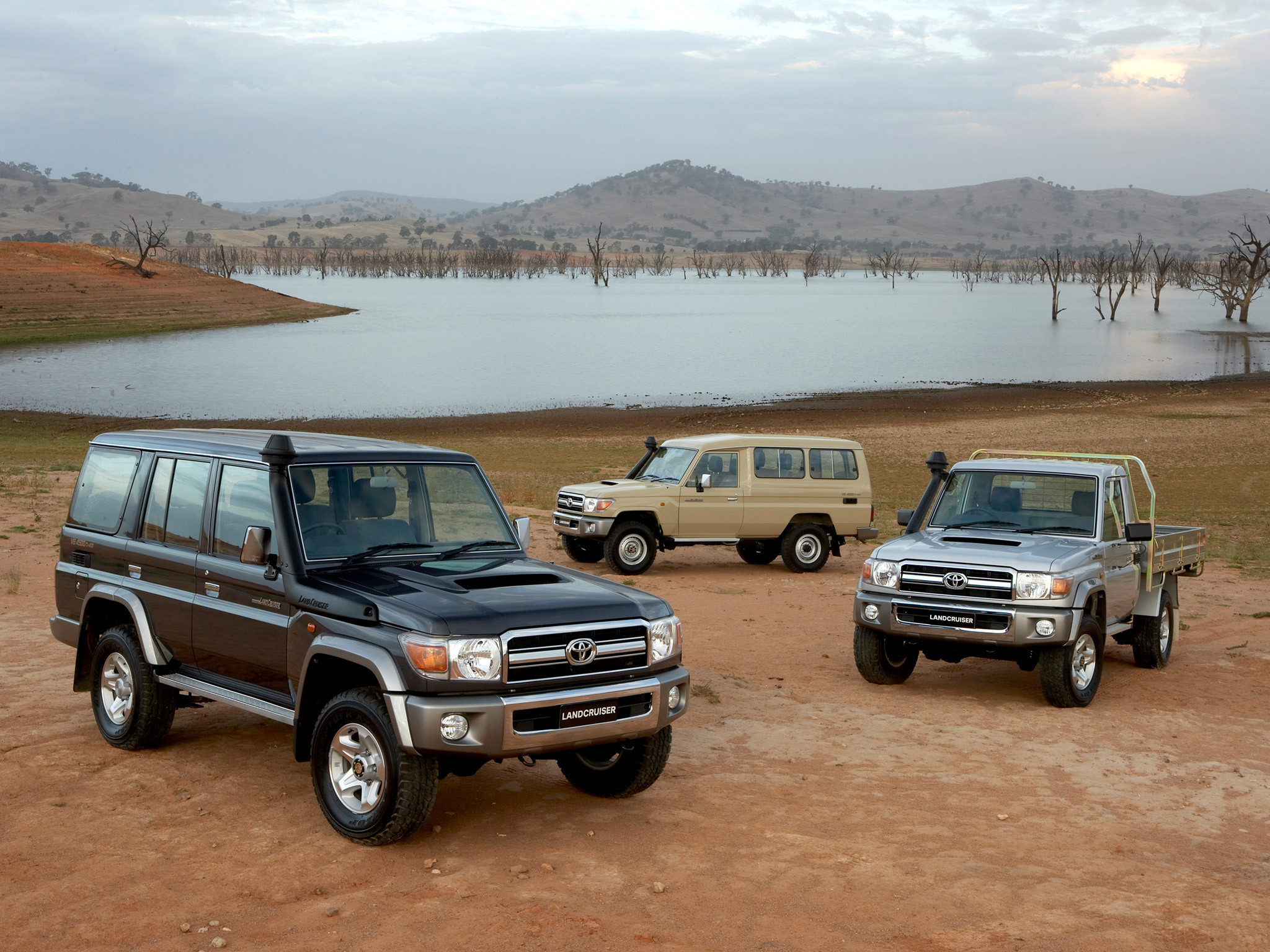
The first pre-condition however was that the new Land Cruiser was not to sacrifice any of its toughness, so a strong ladder frame was outfit with rigid leaf springs. The body plates were thickened by 1.0mm for added strength. While leaving something of the image of the 40-series, such as externally added fenders, it was also given modern features such as curved glass. As before there were two body types available, the short BJ70 (soft top and van), and the middle BJ73 (FRP top).
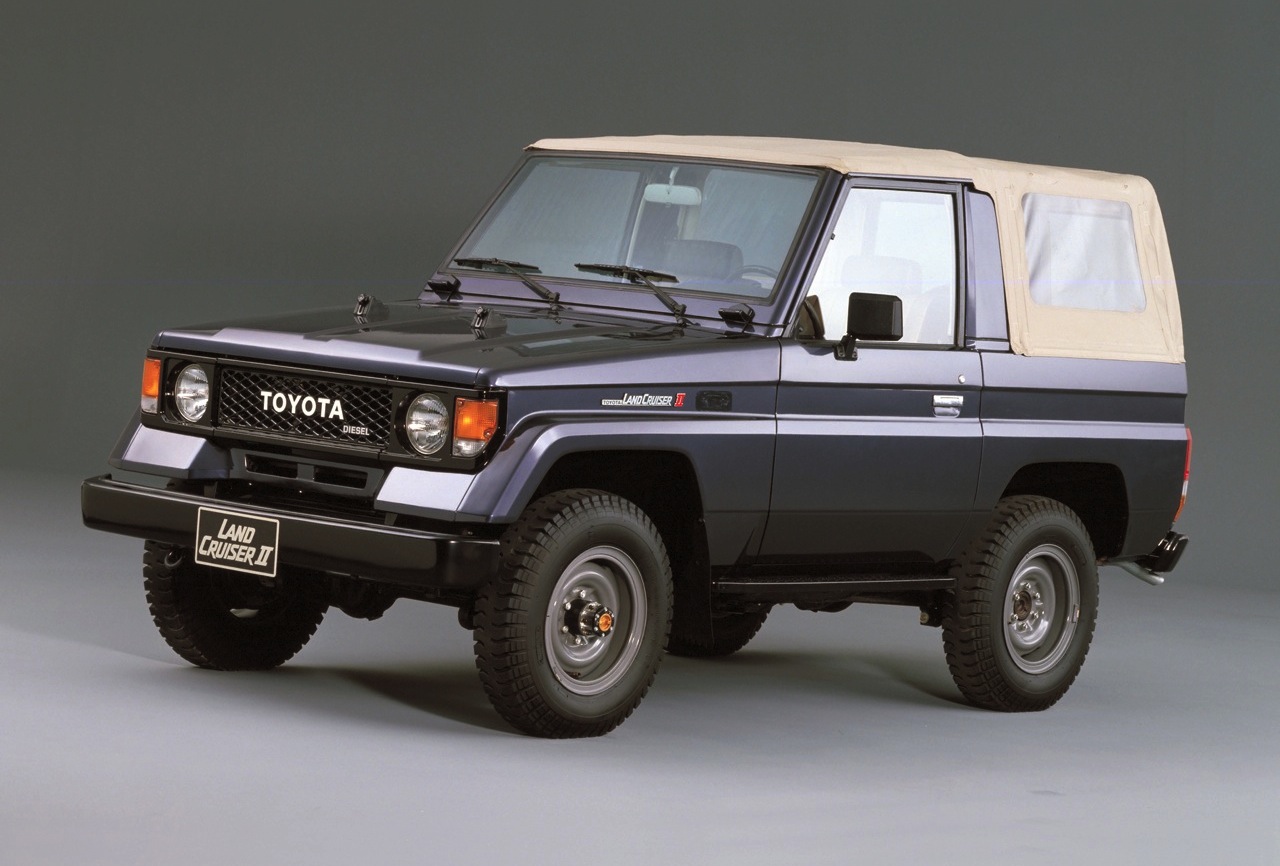
In 1985 a derivative of the BJ70 model was added, the LJ71G, which had a 2L-T-type engine (4-cylinder, 2,446cc, 85PS, 19.2kgm). As indicated by the letter G, this model was registered as a passenger car type wagon. It had a soft appearance in the front mask, and the suspension had rigid coil springs. In the export model it was known as the Light Land Cruiser, or the Land Cruiser II. Moreover, this was the same engine that was installed in the 4 Runner
At that time the BJ70 lineup was also expanded with the addition of the BJ71 and BJ74, which had a 13B-T-type turbo diesel engine. The BJ74 LX grade also came with automatic transmission.
Later the Land Cruiser shifted its weight to the 60-series. In competition to outdo its rival model the Pajero in terms of luxury, the 60-series evolved into the 80-series. During this period the 70-series tended to fade into the background.
Then in 1990 a significant minor change was introduced in the 70-series, when two newly developed engines were introduced; the 1PZ-type engine (replacing the 3B-type with an OHC (Over Head Camshaft) 5-cylinder, 3,469cc, 115PS, 23.5kgm engine specs), and the 1HZ-type engine (replacing the 13B-T with an OHC 6-cylinder, 4,163cc, 135PS, 28.5kgm engine specs). Moreover, to the middle length model a new ZX grade was added. Both the PZJ70 short and the HZJ73 underwent modifications.
Following that in the same year the 70-series wagon underwent a complete makeover. In addition to the original 2-door, a 4-door semi-long was introduced, the name was changed to the Prado, and with other design changes it took on its own unique identity. The 4-door model had 3 rows of seats and could carry 8 people. Compared to the 70-series that was registered as a commercial vehicle, it now had more potential reclassified as an RV. The 2L-T-type was transformed with electronic controls in the new 2L-TE-type engine, which gave it improved performance. With the minor change the short version kept its LJ71 number, while the long version was renamed the LJ78. At this time also appeared a 4-door semi-long, with a choice of two engines the 1PZ or the 1HZ named accordingly the PZJ77 and the HZJ77.
Land Cruiser 70/II .
Toyota_Land-Cruiser 70 PickUp , Toyota_Land Cruiser_SUV 3 door,
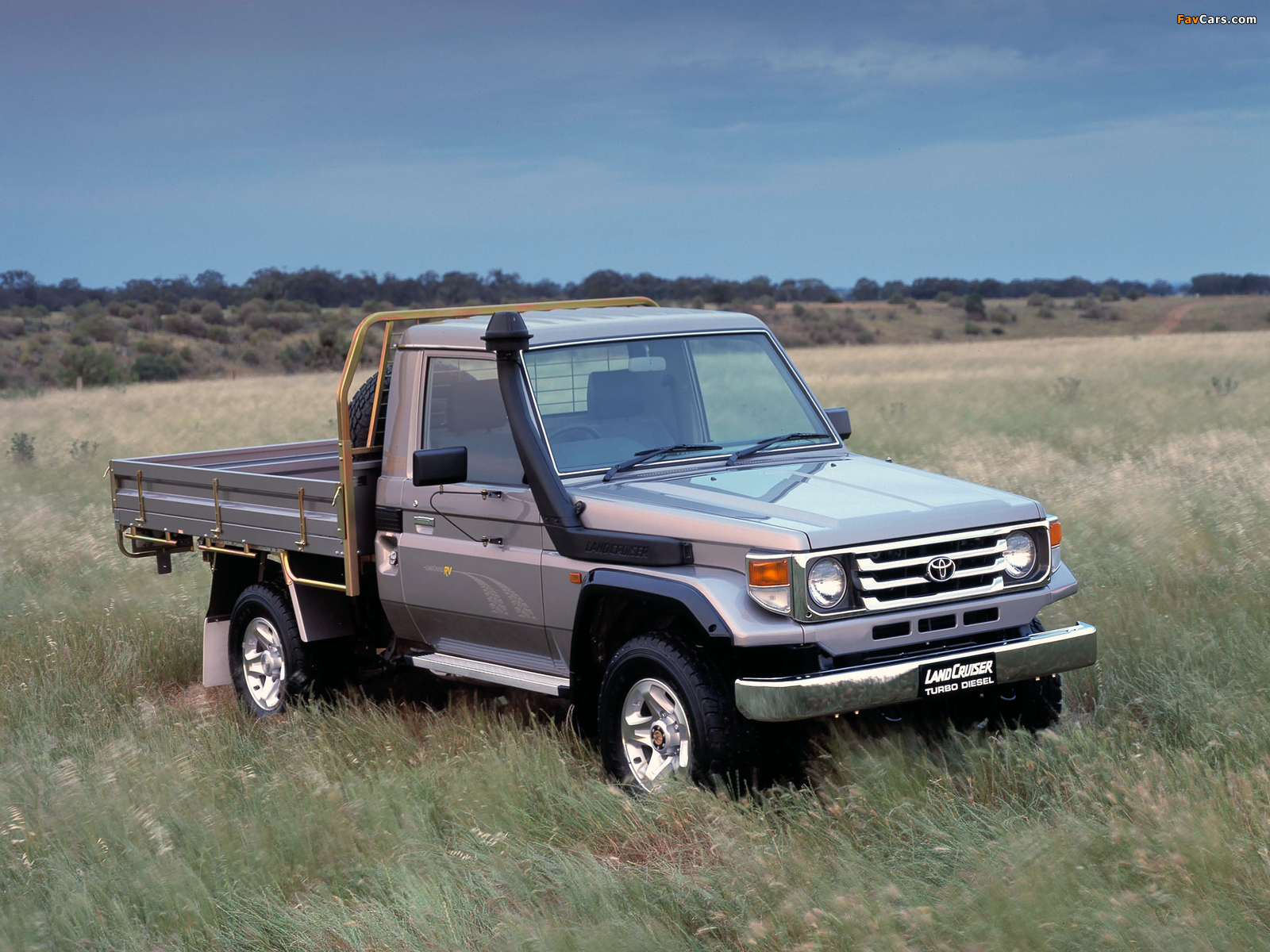
Toyota LandCruiser 70 Series PickUp,
Toyota LC 70series ,
Toyota Land Cruiser SUV 5 door ,
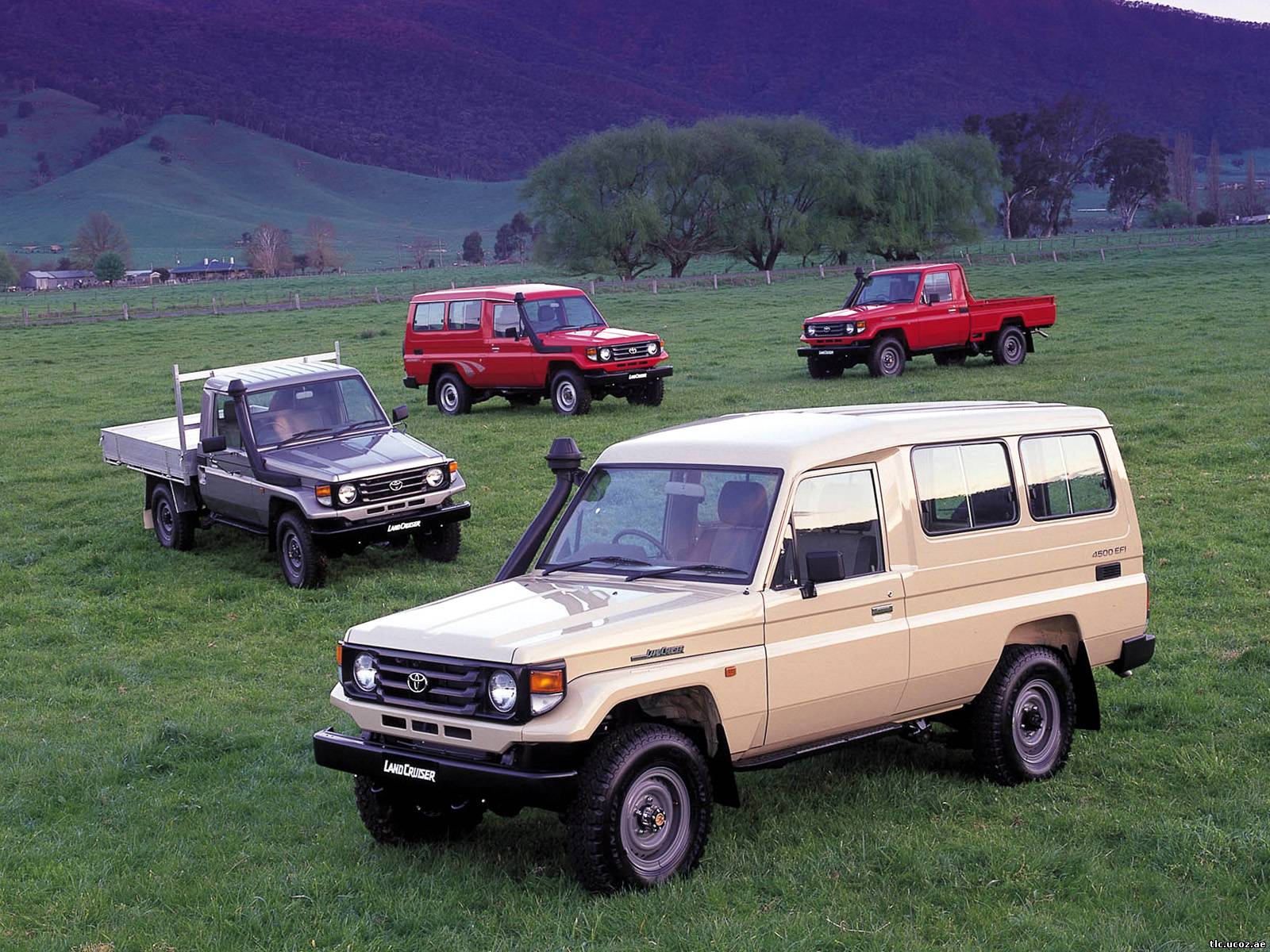
Toyota Land Cruiser 70 Family
Toyota Land Cruiser 70 Series



|
|---|
The concept of the 80 series was the combination of "Advanced" and "Top Quality" features at the highest level.
However, the true reason why the 80 series gained worldwide attention was the fact that it able to maintain its original toughness of excellent off-road characteristics while being loyal to the above.
In 1989 regular minor changes were introduced, all in the direction of greater luxury, which led eventually to the evolutionary transformation of the ever-popular 60-series into the new 80-series.
At the time the 60-series was being driven more for leisure or family use, and as a town car, than as an off-road vehicle.
Over time the demand increased for more fashionable and passenger car like characteristics.
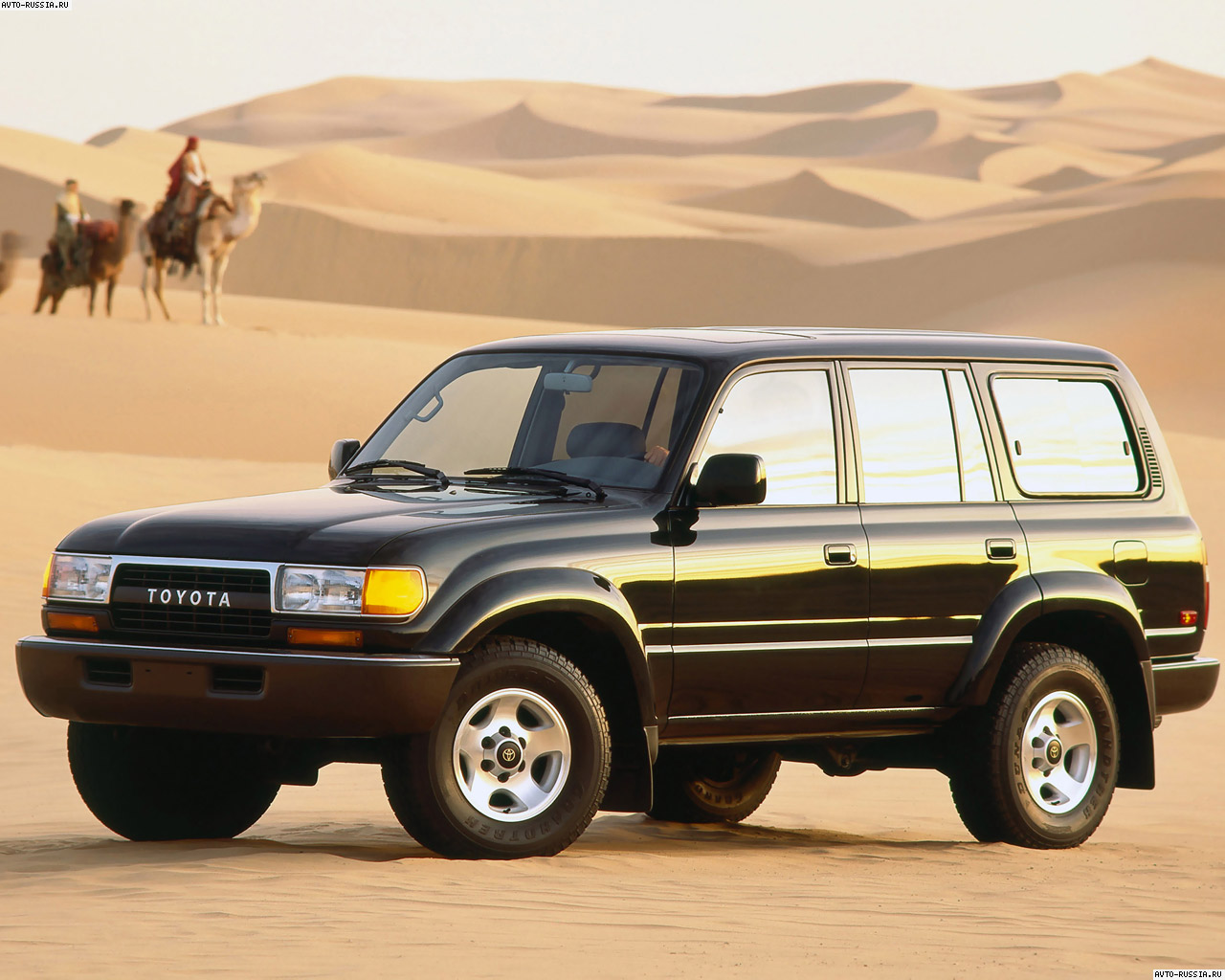
The response to this market demand was the 80-series Land Cruiser. The aim of the 80-series was to be both at the forefront of technology and luxury. Along with passenger car like styling in the front design, wide tires and large fenders gave it a bold effect, looking something like a luxury battleship that could cruise the land.
It was a break from the tradition of the Japanese 4x4. Moreover, accommodations remained for off-road applications, such as space in the instrument panel to install wireless communications equipment, and a rail for mounting a roof carrier.
It was large at 5 meters length and 2 meters wide, with 3 types of engines to choose from; the 3F-E-type gasoline engine, the 1HD-T-type direct-injection diesel turbo engine (4,163cc, 165PS, 37.0kgm), and the 1HZ-type diesel engine. For all but one type of model in the series, it came with rigid coil springs in front and rear, and a full-time 4x4 power train. Of course the top of the line van and wagon offered a VX Limited grade.
In 1992 the original 3F-E-type engine was replaced in the new model FZJ80G with a 1FZ-FE-type gasoline engine (DOHC (Double Over Head Camshaft) in-line 6-cylinder, 4, 476cc, 215PS, 38kgm specs). In 1995, the HDJ81V was added to the lineup, and the 1HD-T-type diesel engine took on 4-valves in the 1HD-FT-type engine (4,163cc, 170PS, 38.7kgm specs).
In addition a camper style model called Active Vacation was added to the lineup, which was registered in a low tax and low maintenance bracket.
In 1996 all models took on ABS and air bags as standard equipment. Only the van series came with the standard GX grade only, and all grades had a widened body.
The 80-series continued to get larger and more luxurious until it was eventually replaced in 1998 with the debut of the 100-series Land Cruiser.
The transition to the next generation was made when the 80-series still enjoyed a high level of popularity, much the same as had happened earlier when the 60-series made way for the 80-series Land Cruiser. However, luxury has not softened the Land Cruiser. It has not sacrificed its ability to take on the toughest roads the world has to offer. No matter that it is more comfortable and luxurious to ride in, the Land Cruiser remains the Land Cruiser, which is the reason for its lasting popularity.
|
|---|
Toyota Land Cruiser 90 Prado.
Demand for a 4WD with easy-to-ride characteristics naturally grew with the enhancement of user types experienced during this particular time. Gaining momentum from these demands, the Mitsubishi Pajero began to aggressively expand its market share. That was the main reason for the introduction of the 90 series Prado.
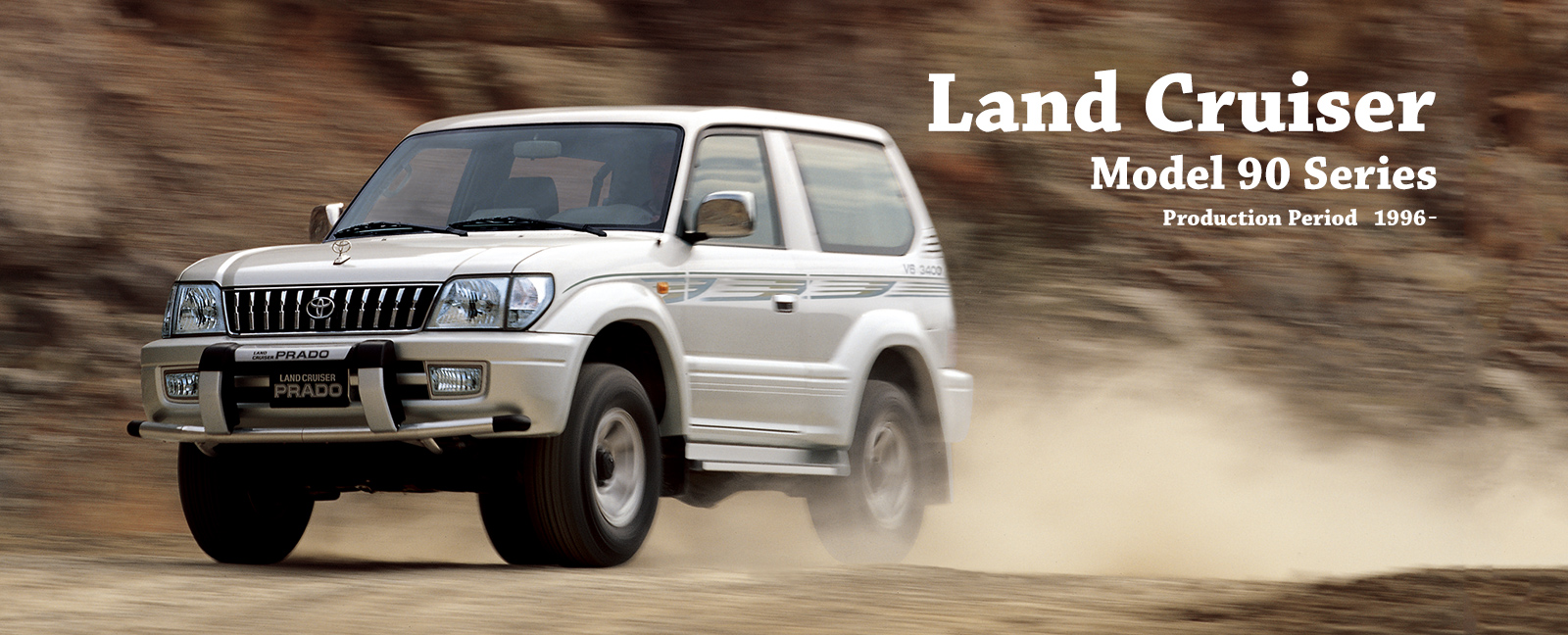
In 1996 the 70-series underwent a makeover and emerged as the 90-series Prado, an independent series of itself. The design was heavy duty, like the 70-series Prado, however with a smaller engine and light classification it took on the image of an underpowered 4x4, and consequently domestic sales did not do as well as expected.
The 80-series was a tough competitor in the market, boasting better performance than its rival model in the class below it, the Mitsubishi Pajero. It did not really hold a candle either to the van type series, which had fully independent suspension, 3 rows of seats, driving comfort and luxury on a par with a passenger car. Even though they were in different classes by spec, the closer rival for the Mitsubishi Pajero was really the Toyota 4 Runner.
Toyota was aiming for supremacy in all classes, so it developed the 90-series Prado as its final weapon against the Mitsubishi Pajero. In addition to the standard size body there was also a wide-size body version, a sporty 3-door model as well as a 5-door model, which were all easy to distinguish from the outside. The 90-series Prado had a wide and low form, and looked amazingly similar to the Mitsubishi Pajero. Even the engine had similar specs, with two choices for the power unit, the 5VZ-FE-type gasoline engine (24-valve V6, 3,378cc, 185PS, 30.0kgm specs) and the 1KZ-TE-type diesel engine with intercooler (2,982cc, 140PS, 34.0kgm specs). The power train was a full-time 4x4, so that the lineup was clearly a front on comparison with the Mitsubishi Pajero. Like the 80-series, the long also offered a model called Active Vacation built for camping.
In this way the specs and the lineup of the 90-series Prado was a major change, but there was another secret behind its birth. Actually the 90-series Prado essentially shared the same chassis platform as the 4 Runner 185-series that had just debuted half a year before. From the time of the 70-series wagon these had shared the same type of engine, and were in a similar class. In a sense it was an inevitable response to user demand that it would take on independent suspension in the front.
This decision led to a big market success. It was featured in a television commercial, quite unusual for a 4x4, and it overtook the Mitsubishi Pajero as planned.
|
|---|
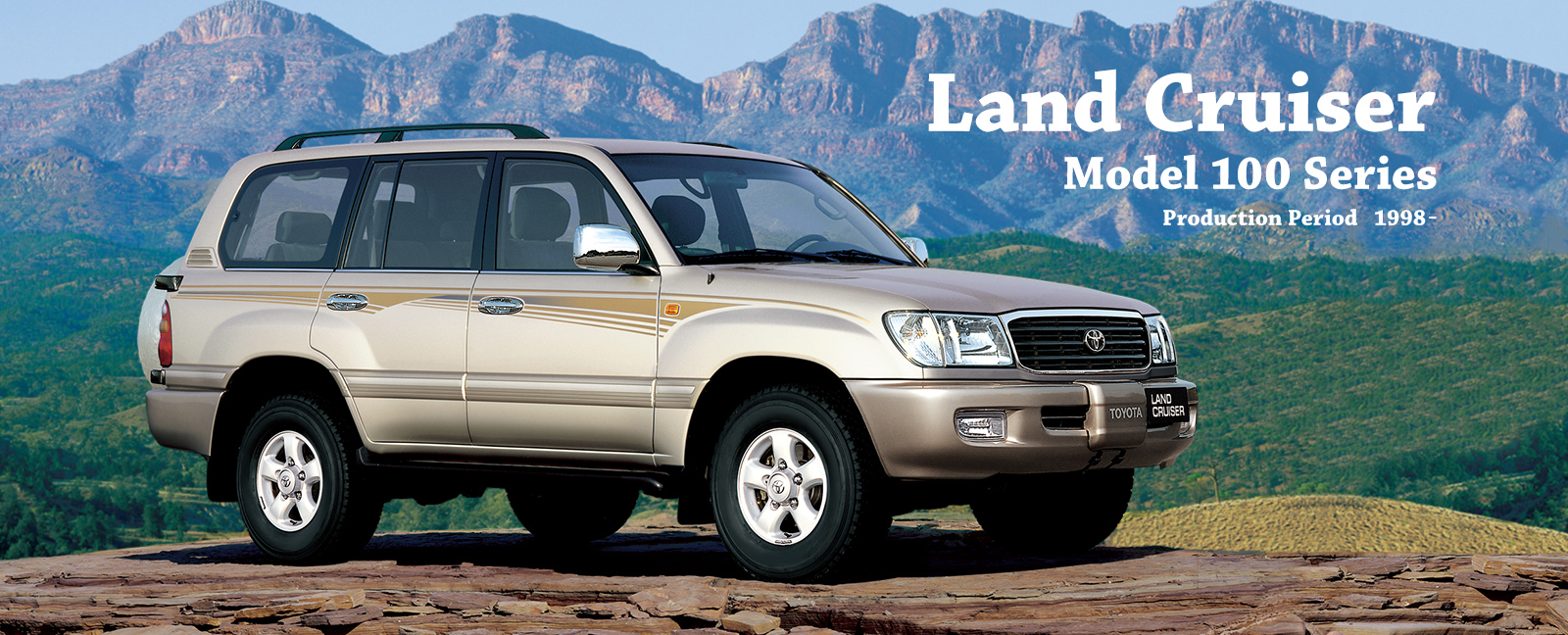
The 100 series debuted despite no apparent loss in popularity of the 80 series prestige SUV (Sports Utility Vehicle) which was at the pinnacle of its success. The luxuriousness even above the 80 series was aimed at being the world's top level and became an instant success.
In 1998 the Land Cruiser 80-series underwent a model change resulting in the release of a new series, the Land Cruiser 100. By this time the name Land Cruiser had earned a strong reputation worldwide for its high performance on bad roads, maneuverability, durability; and as one of the most reliable 4x4s available it had been selected by the United Nations procurement, as well as domestically and overseas for rescue operations, as a relay vehicle for satellite broadcasting, and as a prestige SUV.
For the wagon version a new 2UZ-FE-type V8 gasoline engine was developed, with 32 valves, a piston displacement of 4,663cc, 235PS and 43.0kgm in the specs. For the van model also a new 1HD-FTE-type diesel engine was developed, a 24-valve in-line 6-cylinder engine with a piston displacement of 4,163cc, an output of 205PS and 44.0kgm of torque. Both of these new engines were state-of-the-art power units engineered for low fuel consumption and low emissions.
The front suspension was a double wishbone type independent suspension, and with rack and pinion steering, the Land Cruiser 100 was designed to feel more like a passenger car than its heavy-duty predecessors. To further improve riding comfort and steering stability, hydraulic vehicle height adjustment (AHC) and Skyhook TEMS in the suspension were also made available as options, clearly aiming at improved performance on paved roads.
The interior was luxurious of course, with air-conditioning and an audio system befitting a luxury car.
In 1999, well-received systems like Active TRC (Traction Control System) and the vehicle stability system VSC were added to the 90-series Prado. Then in 2000, along with minor changes and improvements introduced, for theft prevention an engine immobilizer system and other security systems were added to all grades as standard equipment.
Though the Land Cruiser 100 continues to evolve on the path of the passenger car, there are still users overseas who drive it off-road. To meet these needs such as in Australia and other rugged environments, Toyota has created a Land Cruiser 105-series with rigid coil springs in the suspension. No matter how much it takes on the aura of luxury, the Land Cruiser is never far from its roots as an off-road vehicle.
|
|---|
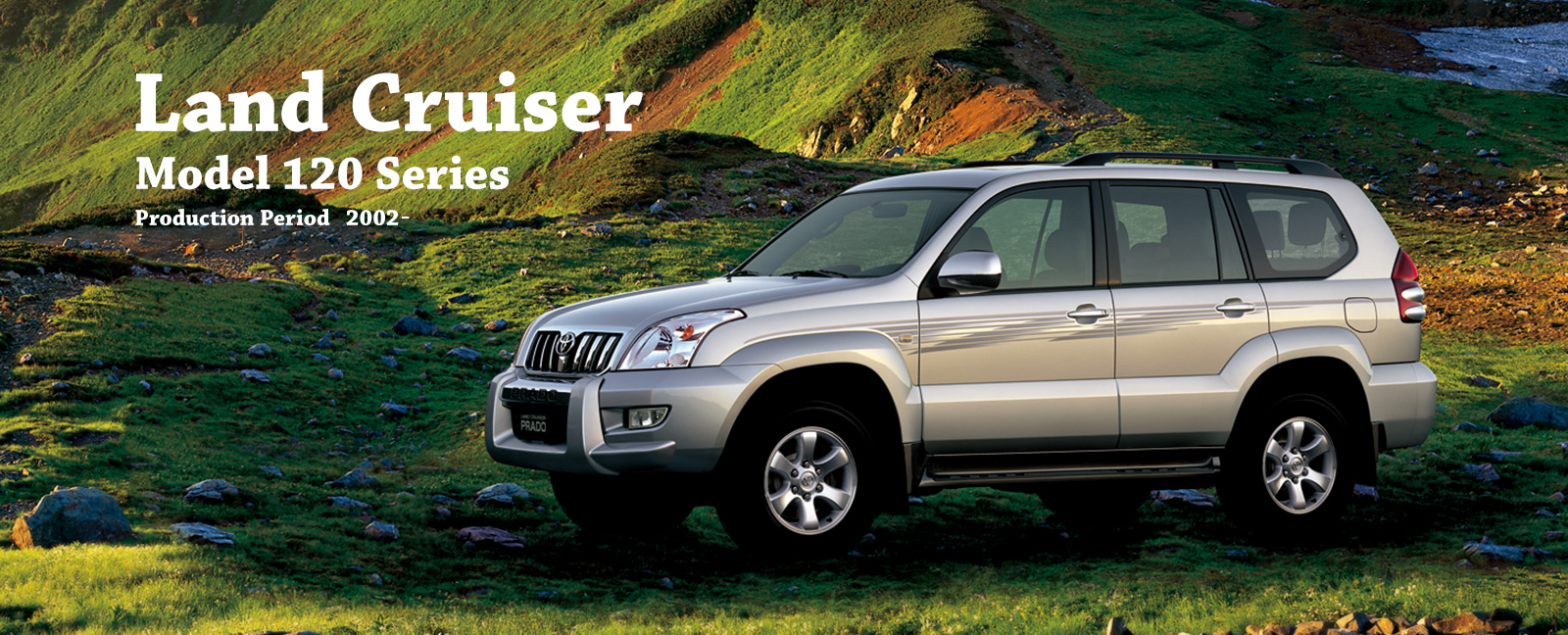
The theme for this full model change was "NEW TRADITIONAL 4WD". The outstanding driving ability succeeded through the generations was further enhanced together with also pursuing excellent on-road running ability.
Continuing the tradition of the preceding 90 Series, the Land Cruiser underwent a full model change in 2002 with further enhanced outstanding drivability under grueling conditions. The quality of the interior and exterior has also been thoroughly refined for a pleasant on-road driving experience that looks set to create a new legacy in the Land Cruiser Prado tradition.
In terms of performance, the front suspension features an independent double wishbone structure while the rear adopts a 4-link axle suspension. A newly designed and exclusive high rigidity frame provides superior maneuverability and running stability while also offering a comfortable ride. The new Land Cruiser not only evolves off-road driving characteristics, but also fully enhances its on-road driving performance.
In addition to the adoption of a new frame, the effective placement of sound reducing and absorbing material and the new flush body surface result in quiet road, wind, and engine noise on par with a medium-high class passenger sedan.
Newly developed Torsen LSD (Limited Slip Differential) is used for the center differential and distributes 40:60 front/rear basic driving force with automatic and instant adjusting to ideal distribution of front and rear torque according to road conditions for enhanced tractability during turning. This has resulted in superior on-road driving as well as superior traction in slippery conditions such as on icy roads. In addition, an active TRC (TRaction Control system) independently controls braking at all four wheels with an active wheel speed sensor semiconductor for superior control when climbing and descending. Furthermore, DAC (Downhill Assist Control) enhances vehicle stability when descending steep slopes, while Hill start assist control depresses vehicle rearward motion when climbing steep slopes.
H?-TEMS, which uses the latest control logic and non-linear H? control, is available as a high-grade option for the combination of a comfortable ride and stable road stance. The newly available rear electronic control air suspension with vehicle height adjustment enhances both on-road and off-road driving performance, and also controls vehicle posture when the vehicle is loaded.
The Land Cruiser is available with the following three engines: a V6 3.4-liter gasoline, a V6 2.7-liter gasoline, and a 3.0-liter diesel turbo engine with intercooler. The automatic transmission has a flexible lock up system with a lock up clutch and greater operating range expanding to low speeds, while the diesel engine vehicles are the first to feature a 1KD-FTV engine. Also featured is hill climb and descent gearshift control that prevents unnecessary up/down shifting when climbing and descending hills..